Fall in Love with the Morkie Breed
Fall in love with the charming Morkie! Discover their traits, care tips, grooming secrets, and everything you need to raise a loving, happy companion.


Get to Know the Morkie
The Morkie, also known as the Morkshire Terrier, is an adorable and highly sought-after designer breed created by crossing the Maltese and the Yorkshire Terrier. This unique combination results in a small dog with a big heart — affectionate, intelligent, lively, and endlessly loyal. Their charming looks, playful nature, and loving temperament make Morkies wonderful companions for families, singles, and seniors alike.
Despite their tiny size, Morkies are full of personality. They thrive on human interaction, enjoy being the center of attention, and adapt well to different living environments, from apartments to larger homes. Their gentle nature and eagerness to bond make them especially suitable for anyone seeking a devoted and cuddly companion.
This guide provides everything you need to know about Morkies — from grooming and training to health care, feeding, exercise, temperament, and more. Whether you’re a new owner or simply learning about the breed, this comprehensive overview will help you understand how to care for and enjoy life with a Morkie.
History & Origin
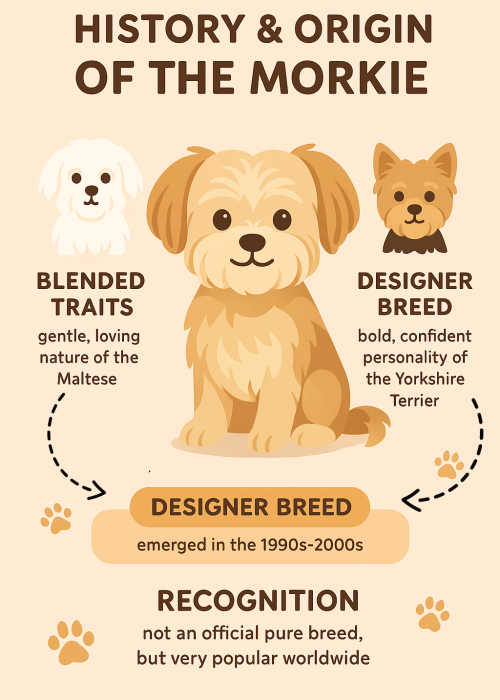
The Morkie is a relatively new designer breed that began gaining popularity in the 1990s and early 2000s. Breeders intentionally crossed the Maltese and the Yorkshire Terrier to create a companion dog that combined the most desirable qualities of both parent breeds.
Why the Morkie Was Created
The goal behind this hybrid was to blend:
- The Maltese’s gentle, affectionate, and people-oriented nature
- The Yorkshire Terrier’s bold, confident, and spirited personality
By combining these traits, breeders hoped to produce a small, loving, and energetic dog with a beautiful coat and a friendly disposition—making the Morkie ideal for families, seniors, and individuals seeking a loyal companion.
Rise of Designer Breeds
During the late 20th century, designer breeds became increasingly popular. This trend began with well-known mixes like the Labradoodle and Goldendoodle. As the movement expanded, smaller toy-breed mixes also gained attention. The Morkie quickly became a favorite because:
- They are perfect lap dogs
- They are low-shedding, making them appealing to allergy-sensitive owners
- They offer a balanced mix of both parent breeds in size, temperament, and appearance
Recognition & Breed Status
Because the Morkie is a hybrid, it is not recognized by major kennel clubs such as the AKC, CKC, or UKC as a purebred dog. However, the breed is recognized by various designer and hybrid dog registries, including:
- The American Hybrid Canine Club (ACHC)
- The Designer Breed Registry (DBR)
- The International Designer Canine Registry (IDCR)
Despite the lack of formal kennel club recognition, the Morkie has skyrocketed in popularity and is now considered one of the most beloved designer dogs worldwide.
Modern Popularity
Today, Morkies thrive as cherished companions across the world. They are especially popular in:
- Urban areas and apartments, due to their small size
- Families, thanks to their playful nature
- Retirees and seniors, who appreciate their loving, calm temperament
Their adorable appearance, affectionate personality, and manageable size have solidified the Morkie’s place as a top choice among designer dog enthusiasts.
Breed Overview (Quick Facts)
| Trait | Details |
|---|---|
| Breed Type | Designer / Toy Breed |
| Parents | Maltese × Yorkshire Terrier |
| Weight | 5–12 lbs |
| Height | 7–9 inches |
| Coat | Long, silky, low-shedding |
| Colors | Black, tan, white, brown, gold, or mixed |
| Life Expectancy | 12–15+ years |
| Temperament | Affectionate, playful, loyal, intelligent |
| Exercise | Moderate – 20–40 min/day |
| Ideal For | Families, singles, seniors, first-time owners |
| Health | Dental issues, luxating patella, collapsed trachea, hypoglycemia, allergies |
| Grooming | Frequent brushing, baths, nail trimming, ear cleaning, regular haircuts |
| Trainability | Smart but stubborn; responds well to positive reinforcement |
| Socialization | Early exposure to people, pets, and environments recommended |
Appearance & Characteristics
Morkies are a designer breed with a distinctive appearance that blends the features of the Maltese and the Yorkshire Terrier. While each Morkie is unique, they typically share several common traits that make them instantly recognizable and highly cherished.
Size
Morkies are toy-sized dogs, generally weighing between 5–12 pounds and standing 7–9 inches tall at the shoulder. Their compact, lightweight frame makes them extremely portable, ideal for apartment living, travel, and for owners who prefer a small companion. Despite their small size, Morkies are energetic, playful, and alert, with a bold personality that often surprises those meeting them for the first time.

Coat
The coat is one of the Morkie’s most distinguishing features: long, soft, and silky, often resembling a Maltese coat with slight wavy texture. Morkies are typically low-shedding, which makes them appealing for people with mild allergies, but their hair requires consistent care to prevent tangling and matting.
Grooming Considerations:
- Brushing: Daily or at least 3–4 times a week
- Bathing: Every 2–4 weeks
- Haircuts: Every 6–8 weeks to maintain shape
- Additional Care: Ear cleaning, nail trimming, and regular dental care
A well-groomed Morkie coat is not only beautiful but also promotes healthy skin and prevents discomfort.
Color Options
Morkies display a wide variety of coat colors and patterns, reflecting the genetics of their parent breeds. Common options include:
- Black – solid or with tan markings
- White – pure or mixed with other colors
- Tan – often seen on the face and paws
- Brown – rich chocolate shades
- Gold – light or deep gold highlights
- Parti-color – blends of two or three colors, often creating a unique and striking appearance
This diversity means that no two Morkies look exactly alike, giving each dog its own personality and charm.

Facial Features
The face of a Morkie is often described as a teddy-bear face, with round, expressive eyes that convey intelligence and emotion. Their small, black nose is perfectly proportioned to their tiny face, and their soft, rounded ears may stand up or slightly flop, depending on genetics.
Facial expressions are a big part of the breed’s appeal, giving Morkies a friendly, approachable, and endearing look that matches their affectionate and playful personality.
Overall Impression
Morkies are small dogs with big personalities. Their combination of toy-sized frame, soft luxurious coat, striking color variations, and expressive faces makes them highly appealing as companion animals. Despite their size, they are alert, confident, and playful, reflecting the best traits of both the Maltese and the Yorkshire Terrier.
In short, Morkies are adorable, adaptable, and affectionate, making them perfect for individuals or families who want a small, loving, and lively companion.
Temperament & Personality
Morkies are famous for having big personalities in tiny bodies. Despite their small size, they are lively, confident, and incredibly affectionate, making them a favorite among dog lovers. Their temperament combines the best traits of their parent breeds — the gentle, loving Maltese and the bold, spirited Yorkshire Terrier — resulting in a dog that is both playful and loyal.

Affectionate and Loving
Morkies thrive on human companionship and are extremely affectionate. They enjoy cuddling, sitting in their owner’s lap, and being involved in family activities. This breed forms strong bonds with their human family and often becomes deeply attached to their favorite people. They are perfect for owners looking for a loving and loyal lap dog.
Loyal and People-Oriented
Morkies are loyal dogs who enjoy being close to their owners. They are people-oriented, meaning they prefer human interaction over long periods of solitude. This makes them highly social and loving pets, but it also means they can suffer from separation anxiety if left alone for extended periods. Their loyalty often extends to being attentive and protective of their family.
Energetic and Playful
Despite their small size, Morkies are full of energy. They love to play with toys, chase small balls, and interact with their owners. Daily playtime and moderate exercise are essential to keep them healthy, happy, and well-behaved. Their playful nature makes them excellent companions for families and individuals who enjoy an active lifestyle.
Alert and Protective
Morkies are naturally alert and often make good little watchdogs. They are keenly aware of their surroundings and will quickly alert their owners to any unusual noises or visitors. While they are protective, their small size means they rely on their confidence, personality, and loud bark rather than physical strength.
Intelligent but Sometimes Stubborn
Morkies are highly intelligent and capable of learning a wide range of commands and tricks. However, they can sometimes be stubborn, reflecting the independent streak inherited from the Yorkshire Terrier. Consistent, patient training using positive reinforcement works best to channel their intelligence and ensure good behavior.
Attention-Loving Companions
Morkies thrive on attention and love to be near their humans at all times. They are happiest when they are part of daily family life, whether it’s snuggling on the couch, following you around the house, or engaging in interactive play. Their social and affectionate nature makes them wonderful companions for singles, families, and seniors alike.
Overall Personality
In summary, Morkies are:
- Affectionate and loving – crave human companionship
- Loyal and people-oriented – form deep bonds with family
- Energetic and playful – full of life and fun
- Alert and protective – aware of their surroundings
- Smart but occasionally stubborn – responsive to patient, positive training
This combination of traits makes the Morkie a charming, loving, and lively companion, perfect for anyone looking for a small dog with a big personality.
Ideal Living Environment
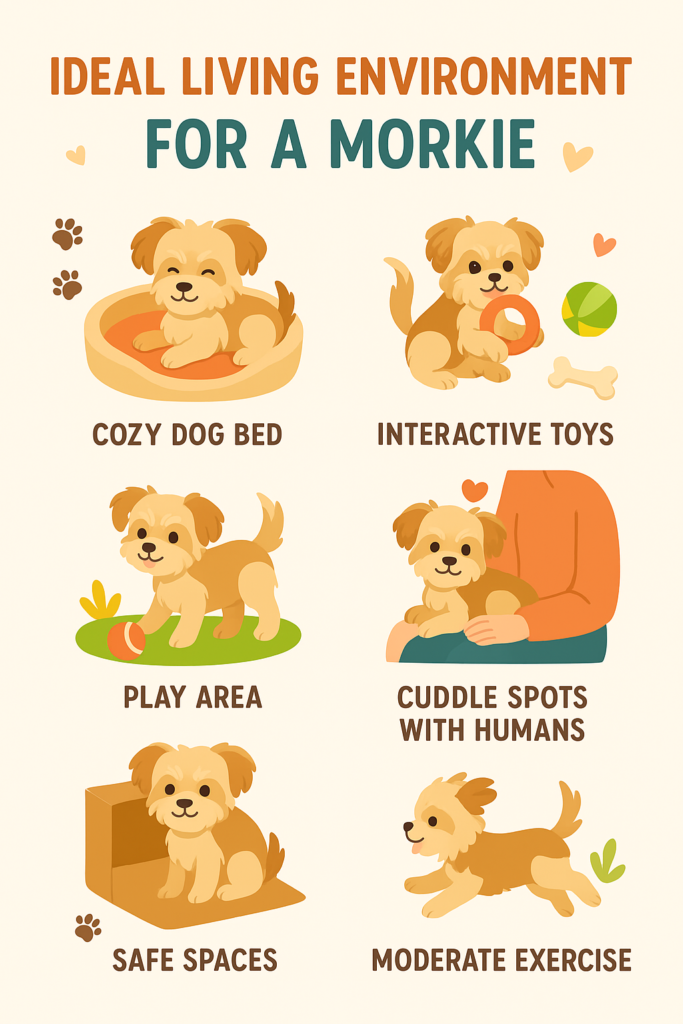
Morkies are small, adaptable dogs that can thrive in a variety of living situations, making them a great choice for many types of households. Their friendly, social nature and moderate energy levels mean they can be comfortable in both compact and spacious homes — as long as their need for companionship is met.
Apartment Living
Morkies are perfect for apartment life due to their small size and relatively low exercise requirements. They do not need a large yard to be happy, but it’s important to provide daily walks and play sessions to keep them mentally and physically stimulated. Apartment owners should ensure their Morkie gets enough interaction to prevent boredom and anxiety.
Small and Large Homes
Whether in a cozy small home or a larger house, Morkies adapt well as long as they receive attention and care. In larger homes, they enjoy exploring different rooms and following their owners around, while in smaller homes, their compact size allows them to comfortably navigate the space without feeling confined.
Families and Seniors
Morkies are excellent companions for families, seniors, and singles alike.
- Families: Their playful and affectionate nature makes them great companions for children, provided interactions are gentle and supervised.
- Seniors: Morkies are small enough to be manageable yet lively enough to provide companionship and joy. Their affectionate temperament makes them ideal lap dogs for seniors seeking a loving, low-maintenance companion.
Attention and Social Needs
Morkies are highly social dogs that thrive on human interaction. They do not like being left alone for long periods and can develop separation anxiety if neglected. To ensure a happy, well-adjusted dog:
- Schedule regular playtime and walks
- Include them in daily household activities
- Consider interactive toys or puzzle feeders if alone briefly
- Avoid leaving them alone for extended hours whenever possible
Owners who spend quality time with their Morkie will find them to be loyal, loving, and deeply attached companions.
Overall Recommendation
The ideal living environment for a Morkie is any home where they:
- Receive daily attention and companionship
- Have space to play safely, whether indoors or outdoors
- Are included as part of the family routine
Whether in an apartment, small home, or large house, the Morkie’s adaptability and affectionate personality make them a perfect companion for a wide range of living situations.
Exercise Requirements
Despite their small stature, Morkies are lively and energetic dogs that require regular physical activity and mental stimulation to stay healthy, happy, and well-behaved. Their playful personalities mean they love to engage in games, explore, and interact with their humans.
Daily Exercise Needs
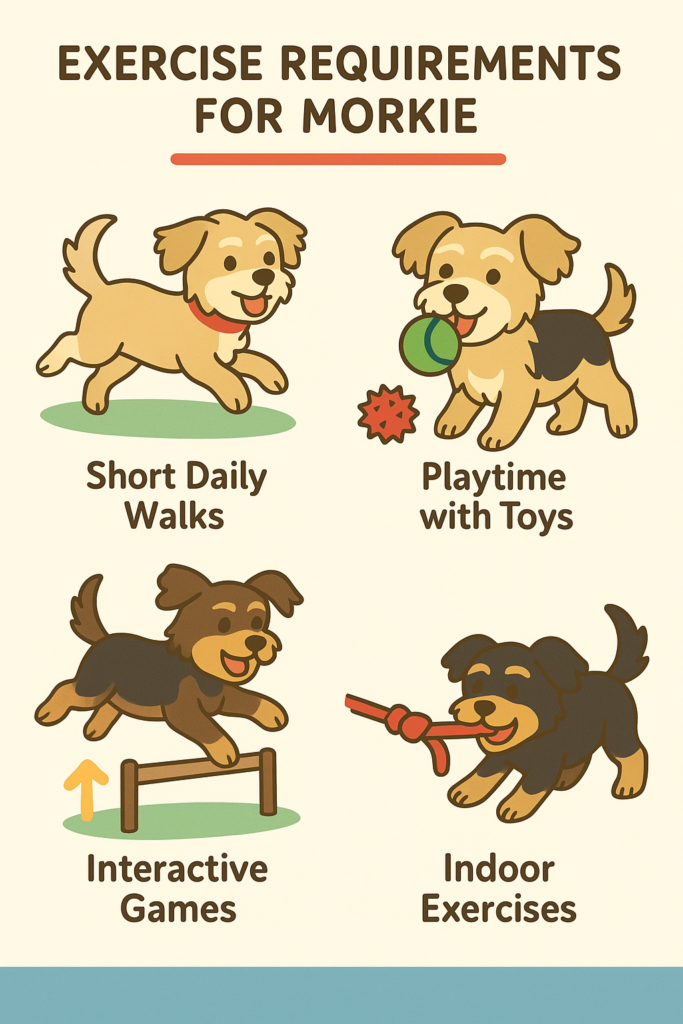
Morkies require a combination of outdoor walks, indoor play, and mental enrichment to maintain their energy levels:
Walking:
- Morkies benefit from 20–40 minutes of daily walking, which can be split into two short walks.
- Walks provide not only physical exercise but also socialization opportunities and mental stimulation through exposure to new sights, sounds, and smells.
- Use a harness instead of a collar to protect their delicate necks.
Indoor Playtime:
- Due to their small size, Morkies can get a lot of exercise indoors through games like fetch, tug-of-war, or interactive play with toys.
- This is especially helpful during bad weather or in apartments without outdoor space.
Mental Stimulation:
- Morkies are intelligent dogs that require mental challenges to prevent boredom and undesirable behaviors.
- Puzzle toys, treat-dispensing toys, basic training sessions, and hide-and-seek games help keep their minds sharp and engaged.
Exercise Safety
Although energetic, Morkies have delicate bones and small frames, so it is important to avoid intense or high-impact activities, including:
- Excessive jumping from furniture or stairs
- Rough play with larger dogs
- High-impact agility exercises meant for larger breeds
Gentle play, short walks, and low-impact activities are sufficient to keep them healthy and happy.
Tips for Keeping a Morkie Active
- Split activity into several short sessions throughout the day.
- Rotate toys and games to maintain interest.
- Use harnesses and leashes to prevent neck injuries during walks.
- Include training sessions as part of daily mental and physical stimulation.
Overall Exercise Recommendation
Morkies thrive when their exercise routine includes moderate daily walks, indoor play, and mental stimulation. By keeping them active in safe, controlled ways, you will help prevent behavioral issues, maintain a healthy weight, and promote a happy, energetic, and balanced companion.
Diet & Nutrition
Morkies are small but energetic dogs, and their diet plays a crucial role in maintaining their health, energy levels, and overall well-being. Because of their tiny size and fast metabolism, it’s important to provide a balanced, high-quality diet tailored to their needs.
Recommended Diet
A proper diet for a Morkie should include high-quality proteins, healthy fats, and essential vitamins and minerals. Their small size requires foods formulated specifically for small breeds. Some options include:
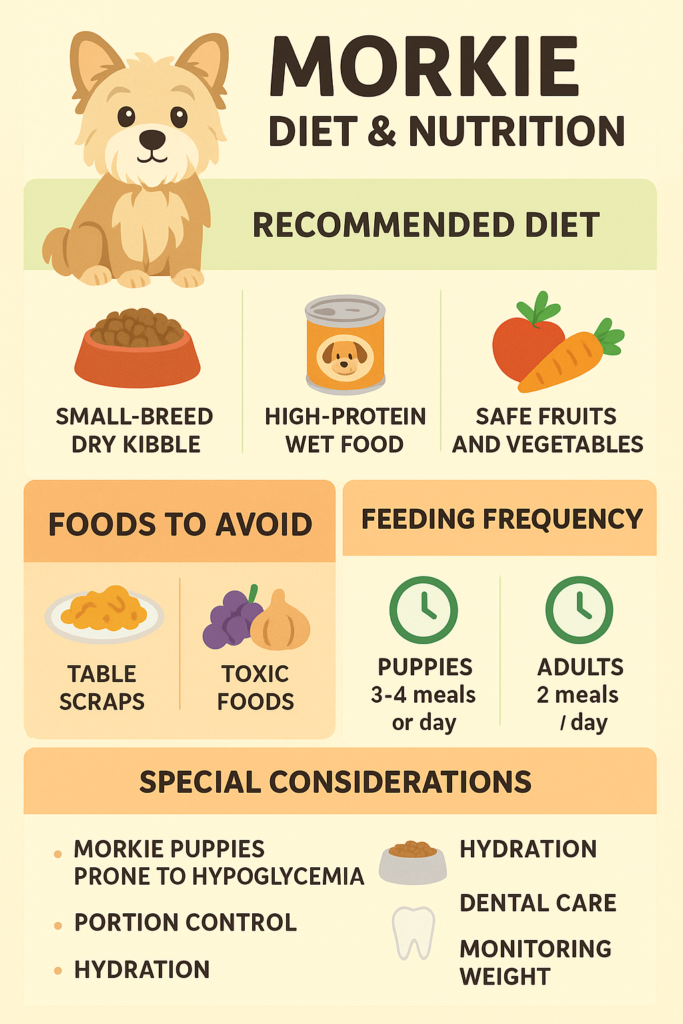
Small-Breed Dry Kibble:
- Look for premium kibble designed for small dogs, as the small-sized pieces are easier to chew and digest.
- Provides essential nutrients for energy, bone health, and coat maintenance.
High-Protein Wet Food:
- Wet food adds variety and can be easier for Morkies to eat, especially if they have dental issues.
- Ensure it is high in protein and contains minimal fillers, grains, or artificial additives.
Fresh Fruits and Vegetables (Safe for Dogs):
- Small pieces of carrots, blueberries, apple slices, or green beans can be healthy snacks.
- Avoid toxic foods like grapes, raisins, onions, and garlic.
Avoid Table Scraps:
- Human food can be high in fat, salt, and seasonings that are harmful to Morkies.
- Sticking to dog-safe foods helps prevent obesity and digestive issues.
Feeding Frequency
Because of their small size and high metabolism, Morkies require regular meals throughout the day:
- Puppies: 3–4 small meals per day to maintain energy and prevent drops in blood sugar.
- Adults: 2 balanced meals per day, ideally spaced 8–12 hours apart.
Feeding smaller, frequent meals helps prevent hypoglycemia, a condition to which Morkie puppies are particularly prone due to their tiny size and fast metabolism.
Portion Control & Weight Management
Morkies can gain weight easily if overfed, which can lead to health problems such as joint stress or heart issues. Tips for maintaining a healthy weight:
- Follow feeding guidelines on your dog food packaging.
- Adjust portions based on age, activity level, and metabolism.
- Monitor weight regularly and consult your vet if weight gain is noticed.
Hydration
Always ensure that your Morkie has access to fresh, clean water throughout the day. Proper hydration is essential for digestion, kidney function, and overall health.
Special Considerations
- Dental Health: Dry kibble helps reduce plaque buildup, but regular teeth brushing is still recommended.
- Food Sensitivities: Some Morkies may develop allergies or sensitivities to certain proteins or grains — consult your vet for a suitable diet.
- Supplements: Only give supplements recommended by a veterinarian, as Morkies generally get sufficient nutrients from a high-quality diet.
Feeding a Morkie a nutritionally balanced diet with appropriate portion sizes and feeding frequency is essential to keep them healthy, energetic, and happy. Puppies especially require small, frequent meals to avoid hypoglycemia, while adult Morkies thrive on consistent, high-quality meals supplemented with safe treats and occasional fresh fruits or veggies.
Grooming & Coat Care
Morkies have a long, silky coat that requires regular, consistent grooming to keep it healthy, soft, and tangle-free. Their coat, inherited from their Maltese and Yorkshire Terrier parents, is prone to mats and tangles if not properly maintained. Grooming is also essential for overall health, as it helps prevent skin issues, infections, and discomfort.
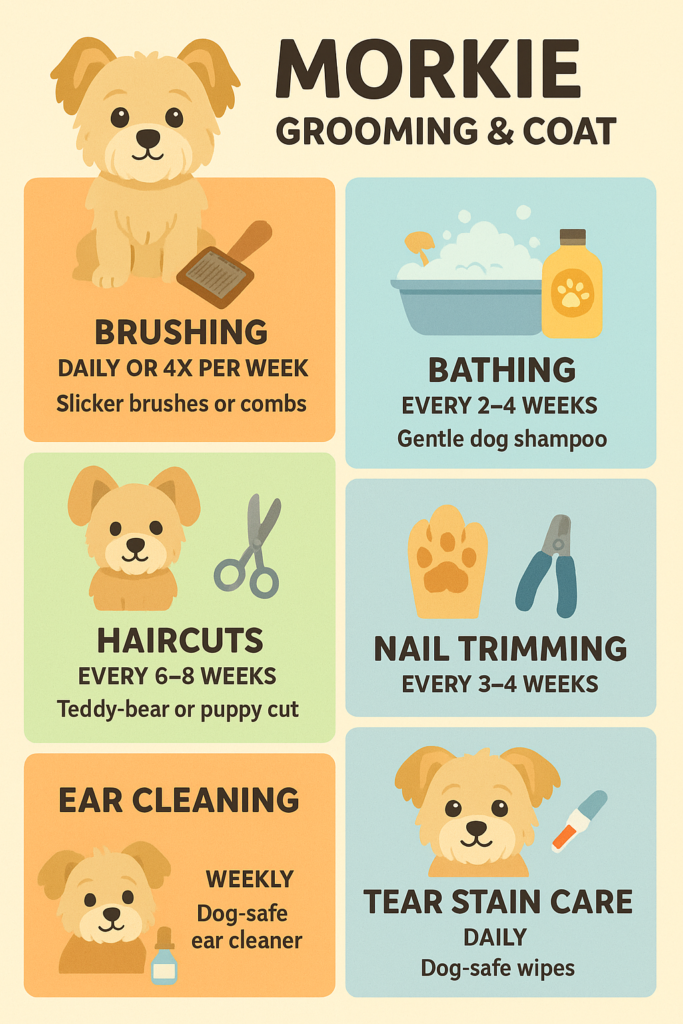
Brushing
- Frequency: Daily or at least 3–4 times per week.
- Purpose: Prevents tangles and mats, distributes natural oils, and keeps the coat shiny and soft.
- Tips: Use a slicker brush or comb designed for long-haired small breeds. Pay attention to sensitive areas like behind the ears, under the legs, and around the collar area.
Bathing
- Frequency: Every 2–4 weeks, depending on activity level and coat condition.
- Purpose: Cleans dirt, debris, and allergens from the coat while maintaining healthy skin.
- Tips: Use a gentle, dog-specific shampoo and conditioner to preserve the coat’s softness and avoid irritation. Ensure water is lukewarm, and dry thoroughly to prevent skin infections.
Haircuts
- Frequency: Every 6–8 weeks.
- Purpose: Maintains a manageable coat length, keeps the dog comfortable, and reduces tangling.
- Styles: Popular Morkie cuts include teddy-bear trim, puppy cut, or natural long coat. Professional grooming is recommended for precise trimming, especially around the face and paws.
Nail Trimming
- Frequency: Every 3–4 weeks.
- Importance: Prevents overgrowth, splitting, and discomfort while walking.
- Tips: Use small dog nail clippers and trim carefully, avoiding the quick. If unsure, a groomer or vet can help.
Ear Cleaning
- Frequency: Weekly.
- Purpose: Prevents ear infections by removing wax, dirt, and debris.
- Tips: Use a vet-recommended ear cleaner and cotton pads. Avoid inserting anything deep into the ear canal.
Teeth Brushing
- Frequency: Daily or at least every other day.
- Importance: Small breeds like Morkies are prone to dental issues, including plaque buildup, tartar, and gum disease.
- Tips: Use a dog-specific toothbrush and toothpaste. Dental chews and regular vet checkups can also help maintain oral health.
Tear Stains
- Morkies are prone to tear staining around the eyes, which can appear as brown or reddish streaks on the fur.
- Care: Gently clean the area daily with dog-safe wipes or a damp cloth to prevent buildup and irritation.
- Tear stain management may also include monitoring diet and using stainless steel food and water bowls to reduce discoloration.
Overall Grooming Tips
- Start grooming routines early in puppyhood to get your Morkie accustomed to handling.
- Always be gentle and patient, especially with sensitive areas like the face and paws.
- Regular grooming not only keeps your Morkie looking adorable but also promotes their physical comfort and health.
Training & Behavior
Morkies are a small breed with enormous personality, intelligence, and charm. While they are quick learners, their Yorkshire Terrier heritage can make them stubborn at times, requiring patience, understanding, and consistent training. Training a Morkie is not just about teaching commands—it’s about building a bond and creating a happy, confident companion.
Key Personality Traits
Understanding a Morkie’s natural personality is the first step in effective training. These small dogs have a mix of traits inherited from their Maltese and Yorkshire Terrier parents, which influence their learning style and behavior:
- Intelligent: Morkies are bright and eager to learn, quickly picking up new commands and tricks.
- Affectionate: They thrive on human interaction and love being part of family activities.
- Stubborn: Some Morkies may test boundaries or resist instructions, requiring gentle persistence.
- Playful & Energetic: They enjoy short bursts of play, interactive games, and physical activity.
- Alert & Watchful: Morkies are naturally vigilant, often acting as miniature watchdogs despite their size.
Training Tips for Morkies
Training a Morkie requires a balance of patience, structure, and positive reinforcement. Understanding their learning style makes training more enjoyable for both the dog and the owner.
- Use Positive Reinforcement: Morkies respond best to praise, treats, and affection. Punishment or harsh corrections can lead to fear or anxiety. Reward behaviors immediately to reinforce learning.
- Keep Sessions Short: Their attention span is limited, so 5–10 minute sessions, 2–3 times daily, are ideal. Multiple short sessions are more effective than long, drawn-out lessons.
- Start Early: Begin training as early as 8 weeks old. Early exposure helps prevent bad habits and builds confidence.
- Use Consistent Commands: Consistency is crucial. Always use the same words, gestures, and routines, and ensure everyone in the household follows the same rules.
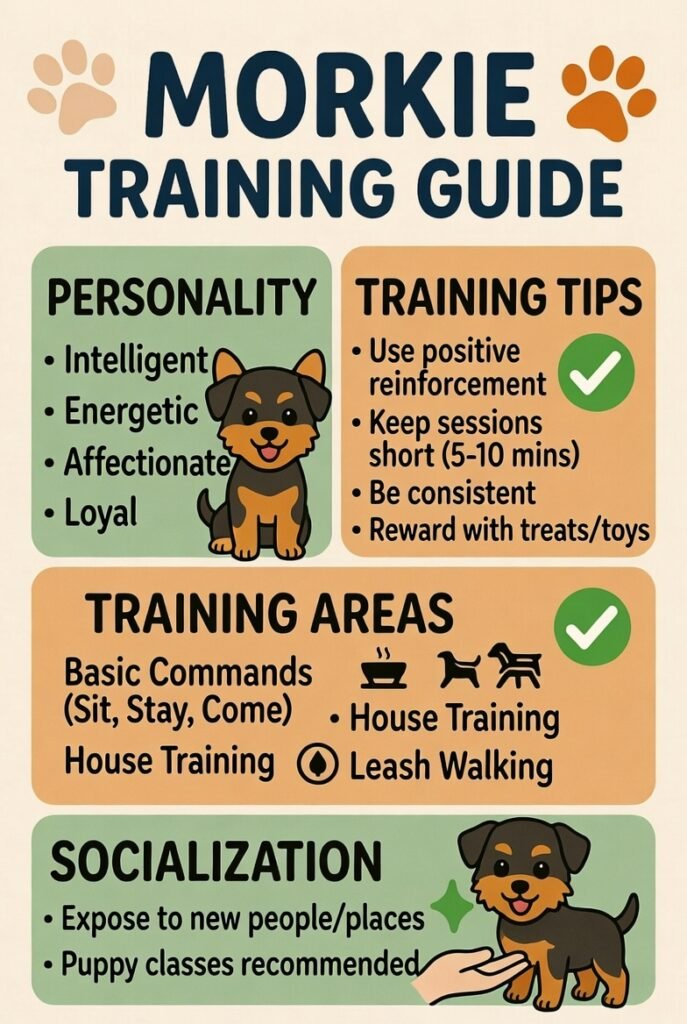
Common Training Areas
To raise a well-behaved Morkie, it’s important to focus on key areas of training that impact daily life and social behavior:
- Potty Training: Establish a consistent schedule and a designated area. Reward successes immediately with praise and treats. Supervision is essential, especially for puppies.
- Barking Control: Morkies are alert dogs and may bark at unfamiliar sounds or visitors. Teach a “quiet” command and redirect their attention when necessary.
- Crate Training: Crates provide a safe, secure space and assist with potty training while preventing destructive behavior. Make the crate inviting with bedding, toys, and positive reinforcement.
- Leash Manners: Use a harness to protect their delicate necks and train them to walk calmly without pulling. Reward good behavior and gradually increase walking distances.
- Basic Obedience: Commands like sit, stay, come, down, and leave it are essential for safety and good behavior. Gradually introduce distractions to ensure obedience in real-world situations.
Advanced Training Tips
Beyond the basics, Morkies benefit from mental stimulation and ongoing reinforcement:
- Introduce puzzle toys, interactive games, and training challenges to engage their intelligent minds.
- Maintain consistency and patience, repeating exercises until commands are mastered.
- Keep training positive and fun, as Morkies respond best when learning is rewarding and enjoyable.
Socialization
Socialization is a crucial part of raising a well-adjusted Morkie. These small dogs are affectionate, intelligent, and playful, but their Yorkshire Terrier lineage can make them cautious or stubborn. Proper socialization helps them become confident, friendly, and adaptable, reducing the risk of fear, aggression, or separation anxiety. Puppies, especially between 8–16 weeks, benefit most from early exposure to different people, pets, and environments.
To ensure a well-rounded socialization experience, gradually introduce your Morkie to:
- Children, adults, and other pets in a safe, controlled environment
- Various environments such as parks, streets, and pet-friendly spaces
- Everyday sounds and experiences, including traffic, doorbells, and household appliances
- New situations and routines, like car rides, grooming sessions, and meeting strangers
Even adult Morkies can benefit from socialization, though patience and gradual exposure are essential. Use positive reinforcement, treats, and praise to encourage calm and friendly behavior. By investing time in proper socialization, you help your Morkie grow into a friendly, confident, and adaptable companion who thrives in family life, social settings, and everyday adventures.
Behavioral Traits
Morkies are highly responsive to rewards and affection, but their independent streak can sometimes manifest as stubbornness. They thrive in households where:
- Training is consistent and positive
- Mental and physical stimulation is provided daily
- Socialization is encouraged through gentle exposure
Training a Morkie is a rewarding experience that strengthens the bond between dog and owner. By understanding their personality, starting early, maintaining short and engaging sessions, and addressing key areas such as potty training, barking control, leash manners, crate training, and obedience, you can raise a well-behaved, confident, and affectionate companion. Morkies respond exceptionally well to positive reinforcement, patience, and consistent guidance, making them loving and obedient members of any family.
Health & Common Medical Issues
Morkies are generally healthy dogs, but like all breeds, they can inherit certain conditions from their parents—the Maltese and Yorkshire Terrier. Understanding these potential issues and taking preventive measures is essential for keeping your Morkie happy, active, and healthy throughout their life.
Common Health Problems
Morkies may experience a range of health issues, some of which are more common in small breeds. Knowing the signs and causes helps owners take early action.
- Dental Disease: Small breeds like Morkies are prone to dental problems such as plaque buildup, gingivitis, and tooth loss. Daily brushing, dental chews, and professional cleanings help maintain healthy teeth and gums.
- Collapsed Trachea: This occurs when the windpipe weakens, causing coughing or breathing difficulties. Using a harness instead of a collar can reduce stress on the neck and prevent worsening of the condition.
- Luxating Patella (Knee Issues): The kneecap can slip out of place, causing pain or difficulty walking. Regular vet checkups and maintaining a healthy weight help protect the joints.
- Eye Problems: Morkies may inherit eye issues like tear staining, cataracts, or dry eye. Routine eye cleaning and veterinary care are important to maintain vision and eye health.
- Ear Infections: Their floppy or semi-floppy ears can trap moisture and debris, leading to infections. Weekly ear cleaning with dog-safe solutions prevents irritation and discomfort.
- Hypoglycemia (Low Blood Sugar in Puppies): Small Morkie puppies are prone to drops in blood sugar, which can be dangerous. Frequent small meals and monitoring activity help prevent hypoglycemic episodes.
- Allergies: Morkies may develop food or environmental allergies, causing itching, redness, or digestive issues. Identifying triggers and consulting a vet helps manage symptoms.
- Heart Issues: Some Morkies are predisposed to heart conditions. Routine checkups and early detection are essential to maintain heart health.
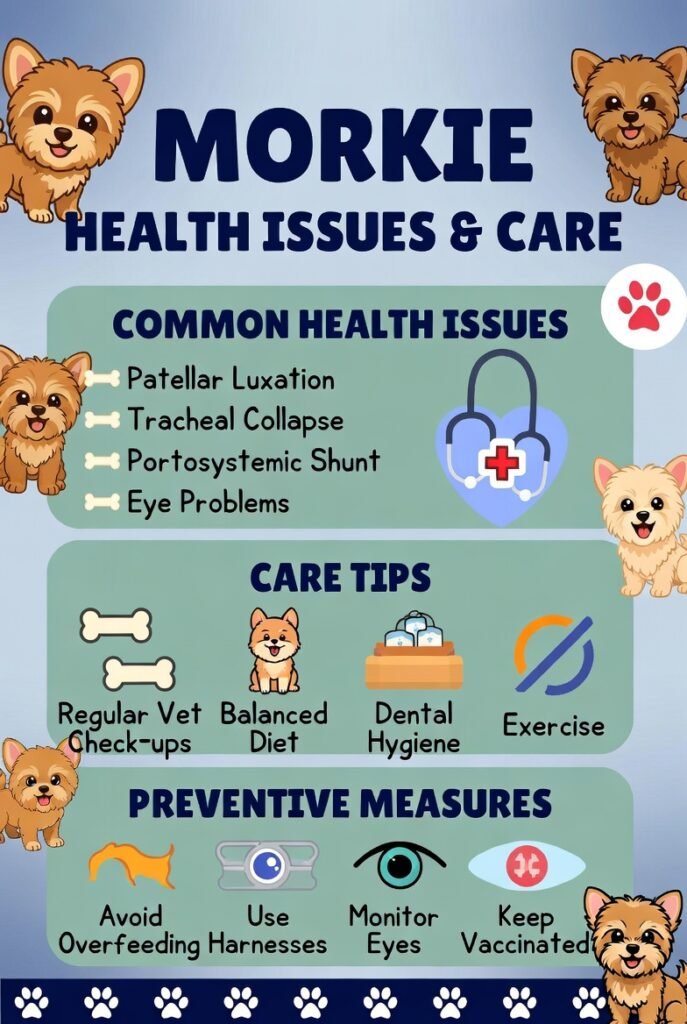
Preventative Care
While Morkies may inherit certain conditions, proactive care can help minimize risks and maintain overall health. Regular preventative measures ensure your dog remains energetic and comfortable.
- Annual Vet Checkups: Regular exams allow for early detection of potential problems.
- Dental Care: Brushing teeth daily and scheduling professional cleanings prevent dental disease.
- Weight Management: Maintaining a healthy weight reduces stress on joints, heart, and internal organs.
- Vaccinations: Keep your Morkie up to date with core vaccines and boosters to prevent illness.
- Parasite Control: Use preventative measures against fleas, ticks, and heartworm to protect overall health.
Morkies can inherit health issues from both Maltese and Yorkshire Terrier lineages, but with proper care, routine checkups, and preventive measures, most of these conditions can be managed or avoided. By focusing on dental hygiene, weight management, vaccinations, and overall wellness, you can ensure your Morkie enjoys a long, happy, and healthy life as a loving companion.
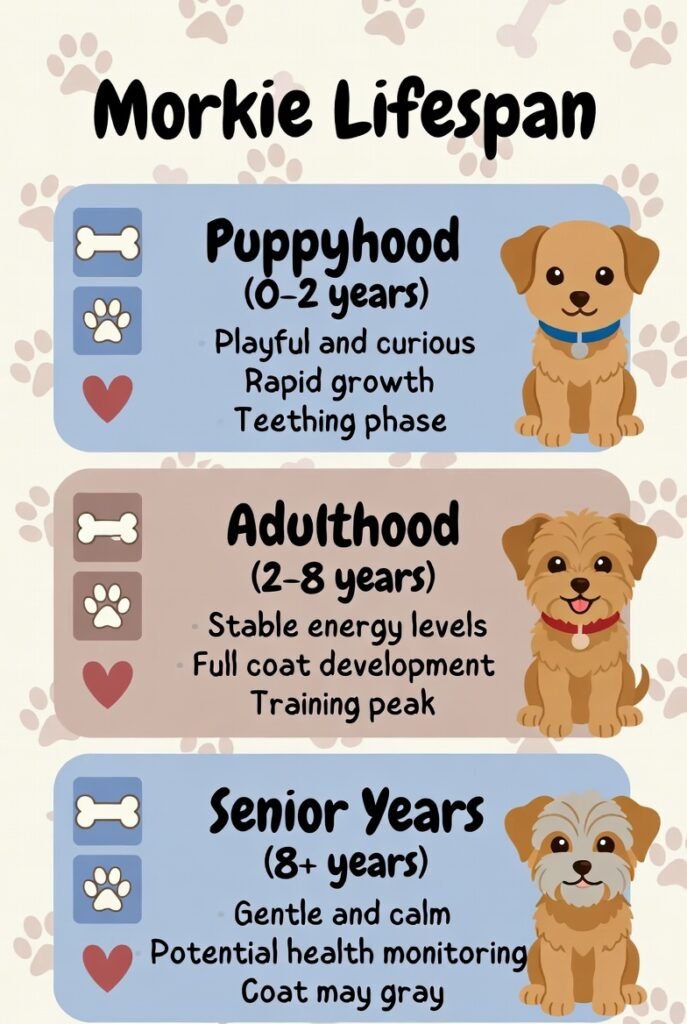
Lifespan
Morkies are known for their impressive longevity, especially when they receive proper care and live in a healthy, nurturing environment. As a small breed, they naturally tend to live longer than larger dogs. On average, a well-cared-for Morkie can live 12–15 years, making them a long-term companion for families, singles, and seniors alike. With exceptional care, some Morkies even reach 16–17 years or more.
Their lifespan is influenced by factors such as genetics, diet, exercise, and routine veterinary care. Dogs from responsible breeders tend to have fewer inherited issues, and consistent preventative care—such as dental hygiene, weight management, and regular checkups—can significantly extend their quality of life. Mental stimulation, social interaction, and a loving home environment also play a big role in keeping your Morkie happy and thriving into their senior years.
In short, when given the right attention and health support, Morkies can enjoy a long, joyful life filled with energy, affection, and companionship.
Cost & Ownership Expenses
Owning a Morkie is a rewarding experience, but it’s important to understand the financial responsibilities that come with this lovable designer breed. Costs can vary widely depending on where you live, the breeder’s reputation, and the ongoing care your dog needs. Being aware of both the initial purchase price and long-term expenses helps you plan properly and ensure your Morkie gets the best possible care throughout their life.

Puppy Price
Morkie puppies can range significantly in price. On average, you can expect to pay:
- $1,000 – $3,000+ for a standard Morkie
- Higher prices for “teacup” Morkies, which are smaller and often marketed as specialty or rare
- Costs may increase if the puppy comes from a reputable breeder, has premium bloodlines, or includes health guarantees and early vaccinations
It’s important to choose a responsible breeder who prioritizes health and ethical breeding practices, even if the price is higher. This often reduces long-term vet costs related to genetic problems.
Annual Expenses
Beyond the initial purchase cost, Morkies require regular care to stay healthy, groomed, and comfortable. Typical yearly costs include:
- Food: Small-breed, high-quality kibble and wet food
- Veterinary visits: Annual checkups, vaccinations, dental cleanings, and preventive treatments
- Grooming: Haircuts every 6–8 weeks, nail trimming, ear cleaning, and occasional de-matting
- Toys & Accessories: Chew toys, beds, collars, harnesses, clothes (optional)
- Emergency care: Unexpected vet visits, medications, or treatments
In total, most Morkie owners spend $1,500–$2,500 per year, depending on lifestyle, grooming frequency, and medical needs.
While owning a Morkie involves a financial commitment, the joy and companionship they provide make them well worth the investment. With proper budgeting for food, grooming, vet care, and emergencies, you can ensure your Morkie lives a healthy, happy, and well-supported life.
Morkies With Kids & Other Pets
Morkies are affectionate, playful, and social companions, but their tiny size makes them more delicate than many other breeds. They often thrive in family environments, especially when surrounded by gentle, respectful children and well-mannered pets. While they enjoy attention and companionship, they also rely heavily on safe handling and proper introductions to ensure positive interactions. With the right guidance, Morkies can form strong bonds with both kids and other animals in the household.
With Kids:
Morkies can be wonderful family dogs, but like all toy breeds, they require careful handling around children. Their friendliness makes them eager playmates, yet their fragile bones mean they must be protected during interactions.
- Great with older, gentle children
Older kids who understand boundaries and how to hold or play with a small dog often build a strong, loving bond with Morkies. - Supervision required with toddlers
Toddlers may unintentionally squeeze, drop, or step on a small dog, so close supervision is essential to prevent injuries. - Teach respectful interaction
Children should learn how to pet gently, avoid rough play, and give the Morkie space when the dog feels overwhelmed or needs a break. - Affectionate family companions
Morkies love being included in daily activities and often follow children around, enjoying the attention and companionship.
With Other Pets:
Morkies generally get along well with other animals, but introductions should be thoughtful and slow. Their social personalities help them adapt, yet their size makes them vulnerable around larger or overly energetic pets.
- Friendly and sociable temperament
Most Morkies enjoy the company of other pets, especially when socialized early. - Best with small or calm dogs
Small, gentle dogs are ideal playmates, as larger or rambunctious breeds could accidentally injure a Morkie. - Slow, controlled introductions
Meeting on neutral ground and using leashes or barriers during early sessions helps establish comfort and prevent overwhelm. - Can coexist well with cats
Many Morkies learn to live peacefully with cats, particularly those that are calm or used to sharing space with dogs. - Monitor early interactions
Until you’re confident all pets understand each other’s boundaries, supervision ensures safety and prevents rough play.
Pros & Cons of Owning a Morkie
Pros
Cons
Should You Get a Morkie?
Morkies are an affectionate, playful, and highly adaptable breed, making them a popular choice for many types of dog owners. However, like any breed, they have specific needs and personality traits that should be considered before bringing one into your home. Understanding these traits will help you decide if a Morkie is the right fit for your lifestyle.
Reasons a Morkie Might Be Right for You
Morkies are perfect for those seeking a small, loving companion with a big personality. They are ideal for people who want:
- A loving lap dog: Morkies thrive on human interaction and enjoy cuddling, making them excellent companions for bonding and relaxation.
- Playful and energetic personality: Despite their small size, Morkies are lively and enjoy games, short walks, and interactive toys, bringing joy and energy to your home.
- Adaptability to living spaces: Whether you live in a small apartment or a larger house, Morkies adjust well to different environments as long as their social and exercise needs are met.
- Good for families and seniors: Their affectionate nature and small size make them suitable for families with children or seniors looking for a gentle, friendly companion.
Reasons a Morkie Might Not Be Right for You
Morkies also have specific needs that may not suit every household. Consider these points if your lifestyle might conflict with their requirements:
- Separation sensitivity: Morkies do not do well being left alone for long periods and may develop separation anxiety if ignored for extended times.
- High grooming and care needs: Their long, silky coats require regular brushing, professional grooming, and maintenance to prevent mats and tangles.
- Need for attention and mental stimulation: Bored Morkies can become vocal or develop destructive behaviors, so they need regular play, training, and engagement.
- Not a low-maintenance dog: They require consistent care, including dental hygiene, grooming, training, and social interaction.
- Energetic temperament: While small, Morkies are active and playful, which may not suit someone looking for an entirely calm, quiet dog.
In short, a Morkie is ideal for someone who wants a devoted, interactive, and adaptable small dog, but they may not be suitable for owners who are away for long hours, want a low-maintenance pet, or prefer a very calm companion. Assessing your lifestyle and willingness to meet their needs is key to enjoying a happy relationship with your Morkie.
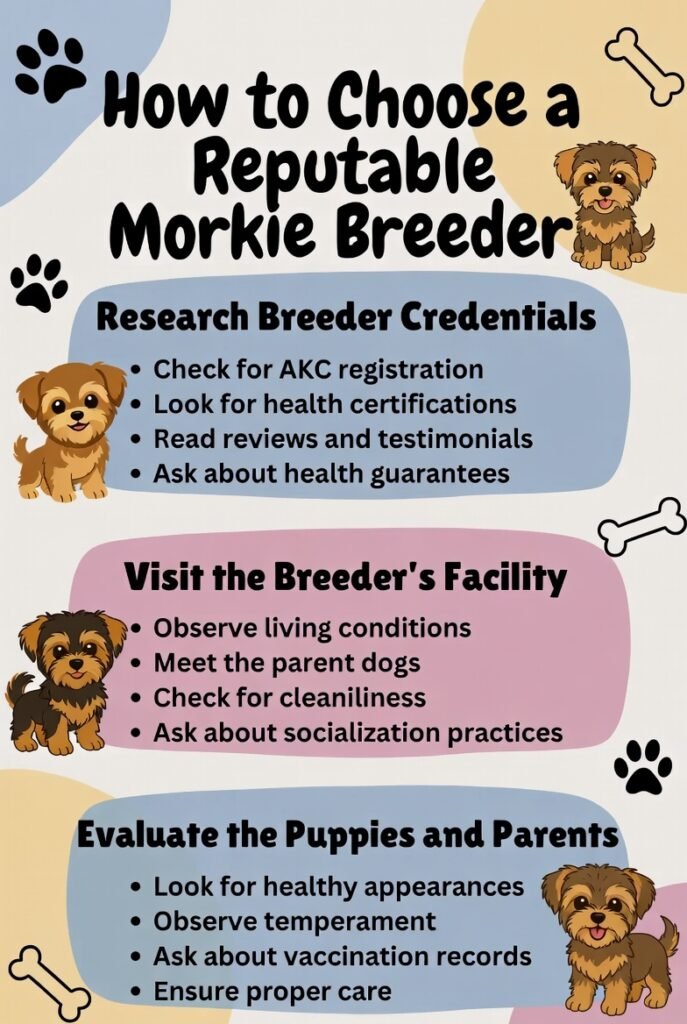
How to Choose a Reputable Breeder
Selecting a responsible breeder is essential to ensure your Morkie puppy is healthy, well-socialized, and comes from a caring environment. A reputable breeder prioritizes the welfare of their dogs over profit and will be transparent about the puppy’s health, lineage, and needs.
What a Responsible Breeder Will Do:
- Allow you to meet the parents: Seeing the puppy’s parents helps you gauge temperament, size, and overall health.
- Provide health records: Reputable breeders supply vaccination records, vet checks, and genetic health testing results.
- Offer a health guarantee: Many breeders provide a written contract that guarantees the puppy’s health for a certain period.
- Keep puppies in clean, safe environments: Healthy, socialized puppies are raised in hygienic, loving settings.
- Ask questions about you: Good breeders screen potential owners to ensure the puppy is going to a safe and suitable home.
Red Flags to Avoid:
- Cheap online ads or “too good to be true” prices: Extremely low prices may indicate unethical breeding practices.
- Puppy mills or mass-breeding facilities: These prioritize profit over the health and well-being of dogs.
- Sellers with no health documentation: If a breeder cannot provide medical records or proof of vaccinations, it’s a major warning sign.
Choosing the right breeder is crucial—not only for the puppy’s health but also for your peace of mind. Taking the time to research, ask questions, and visit the facility will help you find a responsible source for your Morkie.
Common Morkie Myths
There are several misconceptions about Morkies that can mislead potential owners. Understanding the truth behind these myths helps you make informed decisions and ensures proper care for your pet.
Myth 1: Morkies are 100% hypoallergenic
Truth: No dog breed is completely hypoallergenic. While Morkies have a low-shedding coat that produces less dander, they can still trigger allergies in sensitive individuals.
Myth 2: Teacup Morkies are healthier
Truth: Smaller “teacup” Morkies may look adorable, but tiny dogs often face more health problems, including fragile bones, hypoglycemia, and dental issues. Choosing a puppy based solely on size can be risky.
Myth 3: Morkies don’t need much training
Truth: Despite their small size, Morkies are intelligent and require consistent training, socialization, and mental stimulation to prevent behavioral issues.
Myth 4: All Morkies have the same personality
Truth: Morkie temperament varies depending on genetics, socialization, and upbringing. While they are generally affectionate and playful, each puppy may have its own unique personality traits.
Myth 5: Morkies can live without grooming
Truth: Their long, silky coat requires regular brushing, occasional trimming, and dental care to remain healthy. Neglecting grooming can lead to mats, skin infections, and other health problems.
By separating fact from fiction, you can provide proper care and realistic expectations for your Morkie, ensuring a happy, healthy life together.
Final Thoughts
Morkies are more than just a cute, small dog—they are a bundle of personality, love, and energy packed into a tiny frame. Their affectionate and loyal nature makes them ideal companions for families, singles, and seniors alike. They thrive in homes where they receive attention, care, and interaction, and they have the remarkable ability to bring joy and warmth to any household.
Beyond their adorable appearance, Morkies are playful, intelligent, and full of character. They are highly social dogs that enjoy spending time with their owners, playing games, learning new tricks, and exploring their surroundings. Despite their small size, they have surprisingly big personalities, often showing courage, curiosity, and a mischievous sense of fun.
Owning a Morkie does come with responsibilities. Regular grooming, training, socialization, and health care are essential to ensure your pup grows up happy, healthy, and well-adjusted. From brushing their long silky coat to providing mental stimulation, these little dogs thrive when their physical and emotional needs are met.
Ultimately, if you are ready to provide a loving, patient, and attentive home, a Morkie will reward you with unwavering loyalty, endless affection, and years of companionship. They are not just pets—they become cherished members of the family, bringing laughter, comfort, and unconditional love to every day.